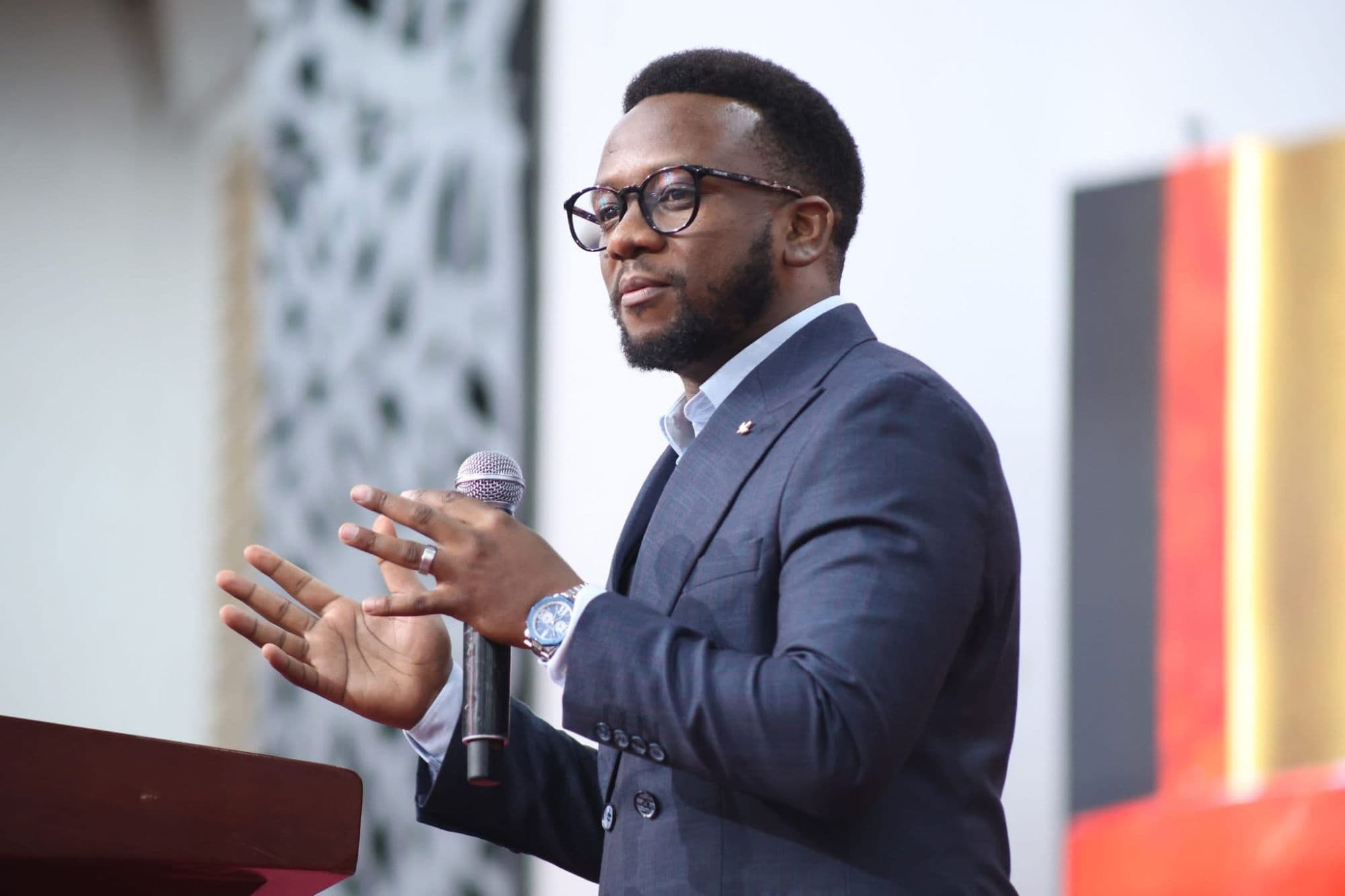
A pastor's house
I grew up in a pastor's house, but I did not grow up wanting to be a pastor. In fact, if you had asked me as a boy what I wanted to become, there was almost no chance I would have mentioned ministry. I had seen enough of it. My parents were full-time ministers, pastoring a small local church in a village in Soy, Kenya, and we did not have much. I became aware of that fairly early. There were things other children had that we simply did not have, and there were conversations about money that I did not fully understand as a child but somehow never forgot. I watched my parents carry the weight of the church while also trying to raise their own children with whatever God provided. Then there were the other children in our community. Our home seemed to have room for everybody's problems. There were needy children whom my parents cared for, people who needed food, people who needed help and people who needed prayer. My parents gave themselves to all of it, and as a child, I did not have the vocabulary to call it sacrifice. I simply knew that we were struggling.
Somewhere along the way, I began to form my own understanding of what I was seeing. In my young mind, ministry became associated with lack, suffering and struggle. I came to believe that my parents' decision to become full-time ministers had affected the quality of my own life and denied me the kind of life I thought I deserved. I wanted plenty, comfort and affluence. More than anything, I wanted to grow up and make sure that my own family would not have to live the way we had lived. I wanted a career that would pay well enough for me to take care of my family without constantly having to wonder whether there would be enough. I did not know then that some of those difficult years were doing something much deeper in me.
While I was learning to resent the circumstances of our life, I was also watching my parents learn to trust God in them. I watched them pray, persevere and keep believing, and somehow God kept providing for us. He took care of us. He was faithful to us. I may not have understood ministry, but I was beginning to understand God, and that relationship with him, which began when I was still very young, would become one of the most important anchors in my journey.
I may not have understood ministry, but I was beginning to understand God.
A faith of my own
It was in high school, at Uasin Gishu High School, that my relationship with God became a personal decision rather than simply something I had inherited from my parents. I made a personal commitment to follow the Lord Jesus Christ as my Saviour. I began to understand that God wanted a relationship with me, not merely a relationship with my parents through which I would somehow benefit. That personal conviction gave direction to the faith I had grown up around, but it did not change the ambitions I had for my future. If anything, the struggles I had experienced strengthened my determination to work hard and build a different kind of life.
The plan
I threw myself into my studies and performed well in my KCSE, scoring an A, and when I was called to pursue my dream course, Civil Engineering, at Kenyatta University, it felt like a major breakthrough. I had worked for this. For years I had imagined a future in which I would have a successful career, make good money, live comfortably and provide my family with things that had been out of reach when I was growing up. Now the first major piece of that future seemed to be falling into place. I was going to become an engineer, and as far as I knew, I had finally found the path that would take me where I wanted to go. What I did not know was that God was far from finished with me, and that the path I had chosen for myself was about to become the setting in which he would begin to undo many of the assumptions I had spent years building.
Disturbed by God
At Kenyatta University, I found myself drawn into the Christian Union community, and what began as involvement gradually became a place of deep growth and discipleship. The Lord began working on my heart in ways that were both unsettling and thorough. Slowly, the things that had once seemed sufficient to define a successful life began to lose some of their grip on me. I still wanted a good career. I still wanted to make money and live comfortably. But those things were no longer enough. I began to wrestle with questions that had never been part of the plan: What is my life actually for? What does it mean to live beyond myself? What is my purpose? What am I supposed to do with the potential and gifts God has given me? What has he actually called me to do? These were uncomfortable questions because God was beginning to disturb a life I had already carefully imagined for myself.
Over time, something even more unsettling began to happen. I started to sense that God was calling me into ministry. I resisted, not because I did not love God and not because I did not believe in ministry, but precisely because I knew what ministry had looked like in my own home. I knew what it had cost my parents. I had watched them struggle, and I had spent much of my childhood promising myself that I would build a different kind of life. Whatever God was asking of me, I did not want that story for my own family. So I began saying small yeses to him, cautiously and gradually, as though I could surrender enough to obey him without surrendering enough to lose the future I had imagined. But God was not looking for a partial surrender. He was leading me toward a much deeper decision, and I was about to discover that sometimes the hardest part of following God is not knowing where he is taking you, but trusting him when the road seems to lead directly through the very thing you have spent your life trying to escape.
Then my father died!
He died suddenly, at precisely the point when I was beginning to move toward a fuller surrender to God. His death did not merely plunge our family into grief; it seemed to confirm every fear I had carried about ministry since childhood. The postmortem concluded that he had suffered cardiac arrest, and I attended the procedure. I remember watching the pathologist examine my father's body, and I remember the expression that came over his face when he opened the chest area to examine the heart. There was a look of surprise, and when I asked what he had seen, he explained that my father's heart was swollen, roughly twice the normal size. Then he made a statement that stayed with me for months. "This man must have been through so much stress."
Those words landed differently because I knew my father. I knew what had occupied his heart in those final months. I knew the church he had poured years of his life into, the vision he had carried and worked so hard to see become a reality, and the frustrations and burdens that came with trying to build what he believed God had given him. Standing there, with tears in my eyes and my heart already broken by the sudden loss of my father, I could not separate his death from the ministry that had consumed so much of his life. In that moment, my childhood fears came rushing back with a force I could not argue with. We were now fatherless. My beloved mum was a widow. And in my mind, the ministry was responsible. I remember deciding, right there in the middle of that grief, that I would never join the ministry. I wanted nothing to do with it. I had spent years trying to find my way out of that life, and now I was more convinced than ever that I needed to stay as far away from it as possible.
So I turned back toward the life I had planned. I would pursue my career, build a successful life and provide the kind of security I had always wanted for myself and my family. It seemed like a sensible decision, especially in the middle of grief. What I did not know was that God was not going to let me walk away that easily. The conviction remained, the burden remained, and somehow, even as I was grieving my father and trying to make sense of his death, the sense that God had called me into ministry became increasingly difficult to ignore. It was one of the most confusing seasons of my life. I was trying to bury my father while wrestling with the possibility that the God who had called me to follow him was also calling me into the very ministry I had come to associate with my father's suffering.
A growing chorus
Then, after a significant season of evangelism and outreach, a distant friend pulled me aside. I think she had watched the way I served, the gifts God had given me and the burden that seemed to be growing in me. She looked at me and said, "Precious, if all you are going to do for the rest of your life is sit behind a desk as an engineer, you will have denied the world a great gift that is in you." Her words stayed with me. That girl would later become my girlfriend, and what began as a committed relationship eventually led, three years later, to her becoming my wife. That is a story for another day, but her words formed part of a growing chorus I could no longer easily dismiss. The witness of people around me, my own convictions and what God was laying on my heart were all pointing in the same direction. Slowly, painfully and reluctantly, I began to accept what I had spent years resisting: God had called me into ministry.
"Precious, if all you are going to do for the rest of your life is sit behind a desk as an engineer, you will have denied the world a great gift that is in you."
Seminary, and a world on pause
The decision did not immediately make everything simple. Knowing that God had called me into ministry was one thing; figuring out what that actually meant for my life was another. I transitioned directly from my undergraduate studies into the Nairobi Evangelical Graduate School of Theology at Africa International University, where I enrolled to pursue a Master of Arts in Biblical Studies. It was a demanding season, but it was also deeply fulfilling. I was finally giving myself to the things I had begun to understand as part of my calling, and throughout the journey there were constant reminders of God's faithfulness. I started the program in September 2018 with the expectation of completing it in April 2020. Then the world changed. COVID-19 brought everything to a standstill, and the plans I had made suddenly had to be reconsidered.
The disruption came at a particularly complicated time in my life. I was a full-time student and, unlike many of my classmates, I had not really had the opportunity to establish myself in Civil Engineering. I had gone straight from my undergraduate degree into theological studies, convinced that I was following God's direction. Now my thesis could not be completed as planned, churches had closed and the entire ministry environment had been thrown into uncertainty. At the same time, my own life was changing. My then girlfriend and I had been making plans to get married, and we had originally hoped to do so in May 2020. I was thinking about what it meant to become a husband, to be responsible for a family and to provide some stability for the life we were about to build together. The questions I had tried to settle about my career began to surface again. Perhaps I should go back to engineering. Perhaps this was the practical thing to do. Perhaps I had been too quick to leave the career I had worked so hard to pursue.
Back on site
We eventually got married on 28 August 2020, and about a month later I got what seemed like a very timely answer to those questions. I was offered a well-paying position as a resident engineer on a major project in the Kitisuru area on the outskirts of Nairobi. The job was good, the pay was good and, after the uncertainty of the preceding months, the opportunity felt like something I could finally build on. There was something exciting about being back in the world I had trained for. The project was demanding and the adventure was wild, but I threw myself into the work and began to make peace with the career I had once been so determined to pursue. Perhaps this was where I was supposed to be after all. Perhaps I could build a good life, provide for my new family and still serve God in the ways that mattered to me.
Seven months later, however, I found myself confronting a problem I could not solve with a spreadsheet, an engineering drawing or a project schedule. I had no sense of purpose. There was no satisfaction in what I was doing, and very little joy. My days had become mechanical. I would show up, do my work, solve the problems that needed solving and go home, but I increasingly felt as though I was simply one small component in a much larger system. Things were getting done, but I could not shake the feeling that something essential was missing. It felt hollow, and at times I wondered whether I was wasting the most precious asset I had: my mind. I had spent years believing that a successful career would finally give me the kind of life I wanted, yet now I had the career and still felt strangely empty.
Sundays
The contrast became impossible to ignore when I looked at my Sundays. Somehow, Sunday was different. It was the one day of the week when I felt fully alive, present and useful. I would teach a Sunday school class, preach in the youth church, lead worship or pick up an instrument, and something inside me would come alive in a way that it simply did not during the rest of the week. I began to ask myself what it was about Sundays that made such a difference. The answer was not difficult to find. It was ministry, it was people. It was teaching Scripture, serving, leading, creating spaces where people could encounter God and watching something happen in the lives of those I was serving. Those moments gave me a sense of purpose that my engineering work, despite all its professional satisfaction and financial benefits, could not give me. I began to wonder what it would feel like if I could experience that sense of meaning every day instead of waiting for Sunday to arrive.
I began to wonder what it would feel like if I could experience that sense of meaning every day instead of waiting for Sunday to arrive.
My wife and I eventually had the conversation that neither of us could avoid. I had a good job, a good salary and the security that came with knowing what I was doing and where my life was headed. I was also a newly married man, and walking away from a stable income was not a decision to be taken lightly. Yet we both knew that something was wrong. We had to decide whether we were going to hold on to the security we had found or trust God with the uncertainty that lay on the other side of obedience. In the end, we decided it was time for me to leave engineering and return to ministry. It felt like moving from safety into an unknown space, from assurance into a journey of faith. I knew I was giving up something tangible. What I did not know was how long the road ahead would be or how much faith it would require.
The long road
The next two years were much harder than I had imagined. I went back to school determined to finish my thesis, but completing it proved far more difficult than I expected. I missed my graduation in 2021, and that affected us deeply. Without the completed degree, it was difficult to know what the next step would be, and the future began to feel increasingly uncertain. I tried to find other ways of making things work. I attempted to start businesses, but they failed miserably. I tried different things, hoping that perhaps one of them would open a door and give me some stability while I figured everything else out. Yet almost everything I tried to do outside ministry simply refused to pick up. It was frustrating and, at times, deeply humbling. I had left a good engineering job believing I was stepping into God's purpose, only to find myself in a season where I could not seem to make anything work.
Eventually, I stopped trying to manufacture an answer. I met with my Senior Pastor and asked if I could be allowed to volunteer full-time in ministry at my local church, CITAM Thika Town. There was something humbling about making that request. I had a master's degree that was still unfinished, a career I had walked away from and no clear idea of how things were going to come together. Yet ministry was the one place where I continued to find a sense of life and purpose. If I could not yet see where it was all going, I could at least serve where I was. So I gave myself to the work and trusted that the rest would eventually become clear.
Something began to change when I stopped trying to force the future. I returned to the things I had been struggling to finish, and I eventually completed my thesis. I graduated, and not long afterwards, the Lord opened a door for me to formally join the ministry at CITAM. It was not the neat, straight path I had imagined when I first began responding to God's call. There had been detours, interruptions, doubts, grief, financial uncertainty, a return to engineering and then a second departure from it. There had been seasons when I wondered whether I had made the right decision and seasons when I simply had to keep moving without knowing how things would turn out. But looking back, I could see that God had been present even in the parts of the journey that had made the least sense to me.
And now, here we are
In January 2023, I was posted to CITAM Valley Road. I arrived carrying all the experiences that had brought me there: a childhood shaped by the struggles of a pastor's family, a determination to build a different life, a career in Civil Engineering, years of theological training, the grief of losing my father, the resistance to ministry, the eventual surrender to God's call, a brief return to engineering, a difficult season of uncertainty and finally the decision to trust God again. I did not know then what the years ahead would hold, but I knew that I had finally stopped trying to make my life fit the picture I had drawn for myself.
And so, in January 2023, I began a new chapter at CITAM Valley Road. I have been here since, serving, learning, leading and continuing to discover what God might do with a life that took such a long route to get here. And now, here we are!
Thank you for reading. If any part of this story meets you where you are, I would love to hear from you.